Showing posts with label hermeneutics. Show all posts

Sunday, July 19, 2009

THE BLUE PARAKEET [book review]

Fear not. The subtitle of Scot McKnight's book sheds a little light: "Rethinking How You Read the Bible." I won't tell you why he calls it "The Blue Parakeet." I'll make you go read it.

McKnight begins by telling the story of how he developed a love for the Scriptures. He devoured the study notes in whatever study Bible he had. His youth pastor in high school encouraged him to learn Greek. In college, he would go hang out at Eerdman's, Zondervan, and Baker Publishing. Before long, McKnight said that he came across a question that disturbed him then and does to this day. The question is actually simple on the surface: How are we to apply the Bible today [pg 12]?

The examples of tithing, Sabbath, foot washing, and spiritual gifts are used by McKnight as examples of issues that many Christians disagree on. His point is that we all read the same Bible but come to vastly different conclusions, not merely nuanced and peripheral distinctions.

On pgs 29-35, McKnight suggests that people often read the Bible through tradition or with tradition. He explains these differences. After giving several insufficient ways in which people read the Scriptures, he argues that the Bible should be read as a story. His analysis of man being made in God's image and the purpose of Genesis 1-2 is a beautiful portrayal of how the rest of the Bible should be read as story. Later on, however, I believe he betrays this correct construal of Gen 1-2.

McKnight speaks with clarity about Jesus being the redeeming apex of God's redemptive purposes for His covenant community [pgs 72-79]. His point is that the Bible's authority is not innate. God's authority is innate. The Bible, specifically the person and work of Jesus, is to usher is the relationship that was marred in Gen 3. J. P. Moreland wrote a paper a couple of years ago about how Christians are over-committed to the Bible. He called this disease Bibliolatry ["the worship of the Bible"]. I think the idea that Moreland was trying to get across is the same one that McKnight is hinting at:

Adoring a love letter from your wife over adoring your wife is stupid. The letter itself is not stupid, but it is preposterous to have equal emotions for the ink on that page and for the one who penned it.
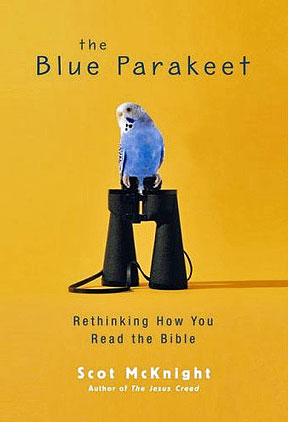

So, what is the Bible's purpose? What is its design? McKnight goes on to talk about listening to the Bible. He cites Klyne Snodgrass: "The biggest complaint in Scripture is that people do not listen to God. Theirs is a freely chosen deafness." McKnight then gives several chapters to the "how" of listening to the Scriptures. This is where he returns to the problem of picking and choosing he raised in chapter 1. Here, McKnight raises more fragile issues such as divorce, death penalty, homosexuality, and others.

Finally, McKnight seeks to apply listening, discerning, and tradition to one of the toughest issues in western evangelicalism: women in ministry. I love the way he ends his argument on pgs 145-207. However, I feel as though he betrays some of what he has already said and some occasional textual clarity in his discussion. He ends by telling a story of his family visiting F. F. Bruce in the spring of 1981. He says that he remembers the conversation word for word:
"Professor Bruce, what do you think of women's ordination?"

"I don't think the New Testament talks about ordination."

"What about the silencing passages of Paul on women?"

"I think Paul would roll over in his grave if he knew we were turning his letters into torah."

"What do you think, then, about women in church ministries?"

"I'm for whatever God's Spirit grants women gifts to do."
The kind of honesty seen in Professor Bruce is the kind of honesty that McKnight presents in his Blue Parakeet and most of this honesty is biblically warranted. He asks questions that many conservative evangelicals are scared to ask. He asks questions that are clearly there in the text, but it is often too taboo to ask them because the weight of tradition says we shouldn't.

Do I agree with all conclusions? Not really. Do I thank God for his sincerity and scholarship? You bet. Do we both openly admit that we want to be led by the Spirit of God, the word of God, and the community of faith? Yes indeed.

Lastly, McKnight's appendices at the end of the book might just be worth the price of the book. One of them is a test he gives his students every year. The test includes a section of questions about Jesus and a section about the person taking the test. Without fail, the test proves that we often make Jesus out to be like us.

So, if you care at all about the "how" of Bible reading, go snag the Blue Parakeet. You can read it in two days. I promise you'll be challenged.

Saturday, March 21, 2009

i had a coupon

This book is usually $50-55. I was blessed to find it for $36 today. And the justification for its purchase was simple - we just got our tax return. This is my "Uncle Sam present" and Sara gets one too. I'm already encouraged and challenged by it. Read its first paragraph below.

Of the making of dictionaries there would seem to be no end. What, then, could possibly justify adding one more item to an already well-stocked inventory? Neither the editors nor the contributors are under the illusion that new reference work will change the world. Nevertheless, we believe that the time is ripe for a resource that combines an interest in the academic study of the Bible with a passionate commitment to making this scholarship of use to the church. [This book] aims to provide clarification, analysis, and evaluation of the various approaches to biblical interpretation currently in the marketplace, with a view to assessing their theological significance - in particular, their value for reading Scripture in and for the community of the faithful. 

Monday, February 9, 2009

i heart hermeneutics

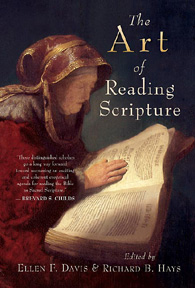
I'm reading through this book called THE ART OF READING SCRIPTURE. It has a lot of gripping things to say about what God has revealed to us. In a particularly interesting article ["Is Patristic Exegesis Still Usable? Some Reflections on Early Christian Interpretation of the Psalms"], what Brian E. Daley said has convicted me big time.

As Daley discusses modern methods of interpretation, he essentially asserts how the standard historical/grammatical hermeneutic is "methodologically atheistic, even if what it studies is some form or facet of religious belief" [pg 72]. He continues to say of the church fathers that: 
Explaining what the text means in itself was not seen as separate from explaining what it has to say to the church, precisely because the narrative contained in the Bible was not seen as a closed unit, epistemologically distant from the life of its readers and hearers, who receive it as God's word. The narrative of God's work of salvation - the real content of the Bible - was a single, universally significant story, an unfinished story. The biblical scholar's task, as well as the preacher's, was to illuminate the cohesion and the continuing relevance of all its details.
I love that Daley sees this need. I love the way he articulates it. He is definitely on to something. Further, the simple title of Gordon Fee's book, LISTENING TO THE SPIRIT IN THE TEXT, shows where he finds "meaning" then and now on the basis of the Scriptures.

Is it problematic that I really sense the Spirit when I think about hermeneutics? I don't think so :)

Friday, January 2, 2009

"knowledge makes arrogant, but love edifies" [1 Cor 8.1 and books i got for xmas]

That is the balance we must and get to hold. With that in view, here are some lovely books I was blessed with for Xmas.


"THE ART OF READING SCRIPTURE" [Davis and Hays] includes several articles I am looking forward to. Some of these ideas are the Scripture's authority in the church, reading Scripture as a coherent story, reading difficult texts, and reading in light of the resurrection. Why can't everybody else see that hermeneutics is so fun!


"KNOWING THE HOLY SPIRIT THROUGH THE OLD TESTAMENT" [Christopher J. H. Wright] is going to be good as well. I really I appreciate his Christocentric approach to the Scriptures.


"ANOINTED WITH THE SPIRIT AND WITH POWER: THE HOLY SPIRIT'S EMPOWERING PRESENCE" [Harvey] is by one of my Greek profs from seminary. For a super-Presbyterian to write a book on the Holy Spirit and His anointing, you know it has to be incredible. This is especially so because the academy is not in view, but the church is.


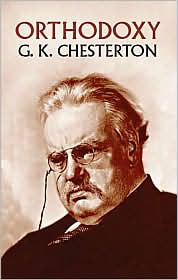
"ORTHODOXY" [Chesterton] is because I lost my old copy and never finished it. It is a poet's unfurling of his attestation to the Apostle's Creed.


"JESUS WANTS TO SAVE CHRISTIANS" [Bell and Golden] is to keep up with cutesy and pop evangelicalism. I've already finished half of this. Bell is just trying to articulate that the Bible should be read with a "new exodus" lens. It smells like evangelical liberation theology [which is a massive paradox] on some pages and smells like the gospel on others.

Wednesday, November 12, 2008

how do the NT writers understand the OT?

This is an awesome discussion. Two recent books should be helpful on this. This is an important question for anybody who reads the Bible.


Go here to see an overview chart.

Saturday, August 30, 2008

the Bible was not written to you but for you

I was reading through one of John Walton's Genesis commentaries the other day. In it he laid some good hermeneutical foundations. I thought you'd like to read over them. Always good to keep in mind, especially since we generally make the Bible about us and our puny little problems.
  1. We must allow the text to pursue its own agenda, not force it to pursue ours.
  2. We must be committed to the intention of the author rather than getting whatever mileage we can out of the words he used.
  3. We must resist over-interpreting the text in order to derive the angle we are seeking.
  4. We must be willing to have our minds changed by the text - that it is at least part of the definition of submitting ourselves to the authority of the text.
  5. We must be willing to accept the inevitable disappointment if the text does not address or solve the questions we would like answers to.

Sunday, July 20, 2008

who cares what the Bible says

Hopefully the title has made you keep reading. I heard John Piper say that one time. Of course, he then followed it up with, "It is what the Bible means that counts." I pretty much agree. I know that content and meaning will have a tight-knit relationship, but what we want is meaning, not mere regurgitation of content.

And for people who don't like John Piper, Hilary of Poitiers essentially said the same thing. "Scripture is not in the reading, but in the understanding."

While I give a hearty AMEN to both of these I also understand that they necessitate weighty philosophical and epistemological explanations, of which I am ready to give a rational defense. I've been helped here by Kevin J. Vanhoozer. Go read everything he has written. Don't swear by it all, but be provoked by his breadth of thinking.


Tuesday, March 4, 2008

"WORLD" iN JOHN [seeking a robust johannine biblical cosmology]

What in the heck does the Apostle John mean when he uses the word "world"? Obviously, we can't pour our understanding of that word into his. Here's the classic example.
This is the way God loved the world - He gave His only unique Son that whoever is believing in Him will not perish, but have life unto the ages. For God did not send His Son into the world to judge the world, but that the world might be saved through Him [3.16-17].
Now, all the Arminians and Calvinists can be up in arms about their abiblical categories that they bring to the text. Did Jesu
s die for everybody or just the elect? Please fight about that on your own time and terms. The question here is not immediately doctrinal. The question is a question of intentionality. What does John mean by "world"? Here's another good one:
My time is not yet here, but your time is always opportune. The world cannot hate you, but it hates me because I testify of it, that its deeds are evil [7.6-7].
This seems like a different "world" than 3.16-17. Other good examples of this apparent contradiction include 4.42, 8.12, 9.39, 16.33, and 17.9-11. Is Jesus just inconsistent in how He talks? Is John inconsistent in how
he writes? What's the deal Johnny?


The deal is that this is one of John's favorite words. He uses it 78x in his gospel account. The first 4 uses come in John 1.9-10. Here, there are at least 2, probably 3 or 4, definitions of world within one breath:
There was the true Light, which, coming into the world, enlightens every man. He was in the world, and the world was made through Him, and the world did not know Him.
With this verse, John implies that there is one world that corresponds with being enlightened; one that is social and inhabited; one that is created; and one that does not know the true Light. So, where does the saved and believing "world" of 3.16-17 fit? Where does the "world" that Jesus doesn't pray for in 17.9 fit in this?

What I want to suggest by not giving precise answers is that when we do read the Bible [which is shocking enough in itself], we read with millions of presuppositions flogging the back of the text. Because we are derived and sinful beings, they aren't going to all go away. But we must, at a bare minimum, acknowledge our presuppositions and come to the word of God on its terms and not ours.
He has stooped to reveal Himself in time, so we must humble ourselves as we seek to grasp what He has revealed. It is not an academic exercise and it is not spiritually effortless, but it is a rewarding pursuit.

Please help us, Holy Spirit.