Showing posts with label Holy Spirit. Show all posts
Showing posts with label Holy Spirit. Show all posts
Wednesday, March 3, 2010
Thursday, December 31, 2009
GO READ THiS BOOK.
Aside from being overwhelmingly needed, Chan's book is a great combination of devotional and theological. It's almost Puritanical in that you can't divorce the two in nearly every chapter.
He writes with relevance, awareness, and pastoral sensitivity. He also includes examples from the lives of other believers that are encouraging and hope-giving.

Chapter 1 begins by citing Tozer:
We may as well face it: the whole level of spirituality among us is low. We have measured ourselves by ourselves until the incentive to seek higher plateaus in the things of the Spirit is all but gone. We have imitated the world, sought popular favor, manufactured delights to substitute for the joy of the Lord, and produced a cheap and synthetic power to substitute for the power of the Holy Ghost.
By grace, Chan remedies this challenge in his book. It is even seen in the book's summary subtitle: "Reversing Our Tragic Neglect of the Holy Spirit."
Saturday, December 5, 2009
Galatians 5 - Am I as spiritual as the Galatians were told to be?
Paul is really ticked off in his letter to his friends in Galatia. They are starting to give in to another gospel that's really not the gospel [1.6-10]. After personal testimony, calling out the false teachers, and some poignant questions, Paul goes on to describe what faithful Christian living looks like.
Paul lists characteristics of what this life is like. For example, it is about freedom [5.1, 5.13]. It is about hope [5.5]. It is about faith working through love [5.6]. It is about serving one another [5.13-15]. It is NOT about a huge list of things in 5.19-21.
But what makes all of the above things make sense?
The source of all of these things for Paul is living by the Spirit. The way that the real gospel is really lived out is by the individual believer and the corporate community of faith living according to the Spirit's lead.
Paul even uses four different and powerful Greek verbs to depict how the Spirit should be our Guide and we should be His dependents.
In 5.16, Paul says we must WALK by/in/with the Spirit. This verb is περιπατέω.In 5.18, Paul says that we must be LED by the Spirit. This verb is ἄγω.In 5.25, Paul says that we LIVE by the Spirit. This verb is ζάω.In 5.25, Paul says that we must KEEP IN STEP with the Spirit. This verb is στοιχέω.
Paul desires his friends in Galatia to have such a relationship with the Spirit of God that the Spirit's power and presence are lucid to all. He hints at this further in 3.2-5 and in 5.22-23.
So, is my life being lived by/in/with the Spirit in such a manner that it can be described as such? Am I merely giving the Holy Spirit a theoretical and theological head nod? How is this kind of living done? Does anyone live this way? Can I get their number?
Thursday, August 27, 2009
resources and books on the Holy Spirit and the gifts of the Spirit
Here. Be a biblical charasmatic. I dare you.
Sunday, August 16, 2009
THE SPiRiT AS OUR COMFORTER
John Owen's book "Communion with God" discusses the nature of the Christian's fellowship with each member of the Trinity. Of course it was written in the mid-1600s. Nobody writes books like that any more.
Owen says that "the foundation of all our communion with the Holy Spirit lies in His being sent by Jesus Christ to be our Comforter or Helper." See John 16.1-7.
Jesus told his disciples, "It is to your advantage that I go away; for if I do not go away, the Helper will not come to you" [16.7].
Owen writes:
So the Lord Christ would have us know this great truth, that the presence of the Holy Spirit with believers as Comforter and Helper, sent by him as promised, is better and more profitable than his bodily presence can ever be.

Owen then writes about the essence of the Spirit's comforting presence.
The Comforter may always abide with us, though not always comfort us.The Comforter often brings comfort to us when we do not receive it. The oasis is near, though we do not always see it.The Comforter actually never leaves the believing soul with no comfort at all.The Comforter, being sent and given, abides with the souls of believers and does not leave them. He reveals Himself in various ways and by various works.He works effectively [1 Cor 12.11]. All that the Holy Spirit purposes to work in us, He fully accomplishes by His almighty power.He works sovereignly [1 Cor 12.11]. The Holy Spirit distributes to everyone as He wills. He gives one gift to one person and another to another person. This He does of His own freedom of will, ruled by His own judgment and choice. So the saints are kept in constant dependence on Him and His sovereignty. If the Holy Spirit gives to us as He wills, then we should be content with that which He gives us.
Thursday, June 4, 2009
Saturday, May 30, 2009
"WALK BY THE SPiRiT" [Gal 5.16]
- The rigidity of Puritan morality.
- The extent of fundamentalism's legalism.
- The historic excess of Rome's ritualism.
- The fluidity of postmodernity's [I don't think this is a cool word anymore?] approach toward doctrine and ecclesiology.
I'm not saying that the above list is all bad. However, I do believe that most of any wrongness in these things comes from a specific source: a weak understanding of the Holy Spirit.

St Paul's understanding of the Spirit was that He was vital and active in the church. For Paul, the goal was never to give the Spirit a theological or theoretical head nod. I am even pressed to find an occasion where Paul's purpose is to assert the deity of the Spirit. Yes, he does write about the doctrine of the Spirit with clarity. Yes, he does hint at the deity of the Spirit in such a way that we should not question it. But what is the hub of wheel of Paul's pneumatology?
Paul sees the Holy Spirit as God's empowering presence in the community of faith. The Spirit is experienced corporately and individually as the relational means by which the covenant community lives. He gifts each member of the body for the building up of the body [1 Cor 12.7, 12.11].
I tend to think that a better experience and/or understanding of the Spirit's personal work in the church would have rightly nuanced the motives and practices of our friends in the list above.
Yet, we are all guilty of not yielding to His voice. May we learn to listen carefully to our Helper.
Friday, May 29, 2009
KiNGDOM and SPiRiT
If the kingdom of God has come crashing into this present evil age in Jesus' life, death, and resurrection [Mt 4.17, Mk 1.15, Gal 1.4, etc], how do we live as citizens of that kingdom in the here and now?
St Paul's answer is that we live by the Spirit [Rom 8, Gal 5-6, 1 Cor 12-14, Eph 4-6, etc].
Paul even says that the Spirit is the "down-payment" and/or "guarantee" of the life with God that is to come [Eph 1.14]. This Greek word for "guarantee" is only used several times in the NT. In his excellent book SIMPLY CHRISTIAN, Tom Wright says that this word "in modern Greek means an engagement ring, a sign in the present of what is to come in the future" [pg 125].
Tuesday, April 28, 2009
Sunday, April 5, 2009
PNEUMATOLOGY 101
With my juniors, I just finished our section on Pneumatology [the study of the Holy Spirit]. It was a really sweet time, especially since most Christians in the south are scared of the Holy Spirit.
We got to discuss how, in Jesus, there is a New Exodus. The Hebrew people got much of their identity from the old exodus. This included an innocent lamb's blood, freedom from bondage, passing through waters, receiving the Law, and being led by God's presence. In this New Exodus [Rom 5-8], all its blessings flow from the slain and risen Lamb. We are unfettered from sin, death, and Satan. We pass through the waters of baptism. We must now live by the Law of God written on the heart. This is done by knowing we can't on our own, but knowing we can by the presence of God guiding us. He guides because He indwells. He is the New Covenant, New Exodus, Holy Spirit of God [Jer 31, Ezk 36-37].
We were able to talk about how Peter's sermon in Acts 2 shows that the Spirit's presence means we are now living in the last days. So, the Spirit's presence looks back to the exodus and is also the down payment of future glory that has entered into our hearts in the present [Eph 1, Eph 4].
Obviously, some of the most fun talks we got to have were over the gifts of the Spirit. Deconstructing the absurd arguments of cessationists in 1 Cor 13.8-10 was healthy for them to witness. Paul's three pleas to the Corinthians to "earnestly desire" the gifts are huge [12.31, 14.1, 14.39]. Nobody prays like that: "Spirit, grant us to speak in the tongues of angels. Cause us to prophesy." It sure sounds biblical though if you read 1 Cor 12-14. This is particularly convicting if you read 12.1. "About spiritual gifts, brothers, I do not want you to be ignorant."
When we pondered the deity of the Spirit, we logically turned to St Paul. One of the primary things that I wanted them to see was that Paul rarely sought to prove that the Spirit was fully divine. This fact seems assumed to him. Rather, Paul seeks to show that the Spirit's divinity means something. The fullness of God - dwelling in sinners! Paul is floored by this and longs for the experiences of life that will come from it. This is how Paul talks about the Spirit's deity.
So... I had to give him half credit.
Question 7 on their test read, "What did we say in class about how the Apostle Paul writes about the deity of the Spirit?" His thoughtful answer:
We got to discuss how, in Jesus, there is a New Exodus. The Hebrew people got much of their identity from the old exodus. This included an innocent lamb's blood, freedom from bondage, passing through waters, receiving the Law, and being led by God's presence. In this New Exodus [Rom 5-8], all its blessings flow from the slain and risen Lamb. We are unfettered from sin, death, and Satan. We pass through the waters of baptism. We must now live by the Law of God written on the heart. This is done by knowing we can't on our own, but knowing we can by the presence of God guiding us. He guides because He indwells. He is the New Covenant, New Exodus, Holy Spirit of God [Jer 31, Ezk 36-37].
We were able to talk about how Peter's sermon in Acts 2 shows that the Spirit's presence means we are now living in the last days. So, the Spirit's presence looks back to the exodus and is also the down payment of future glory that has entered into our hearts in the present [Eph 1, Eph 4].
Obviously, some of the most fun talks we got to have were over the gifts of the Spirit. Deconstructing the absurd arguments of cessationists in 1 Cor 13.8-10 was healthy for them to witness. Paul's three pleas to the Corinthians to "earnestly desire" the gifts are huge [12.31, 14.1, 14.39]. Nobody prays like that: "Spirit, grant us to speak in the tongues of angels. Cause us to prophesy." It sure sounds biblical though if you read 1 Cor 12-14. This is particularly convicting if you read 12.1. "About spiritual gifts, brothers, I do not want you to be ignorant."
When we pondered the deity of the Spirit, we logically turned to St Paul. One of the primary things that I wanted them to see was that Paul rarely sought to prove that the Spirit was fully divine. This fact seems assumed to him. Rather, Paul seeks to show that the Spirit's divinity means something. The fullness of God - dwelling in sinners! Paul is floored by this and longs for the experiences of life that will come from it. This is how Paul talks about the Spirit's deity.
So... I had to give him half credit.
Question 7 on their test read, "What did we say in class about how the Apostle Paul writes about the deity of the Spirit?" His thoughtful answer:
He writes with a feather, lightly dipped into the ink, and carefully strokes the papyrus.
Monday, February 9, 2009
i heart hermeneutics
I'm reading through this book called THE ART OF READING SCRIPTURE. It has a lot of gripping things to say about what God has revealed to us. In a particularly interesting article ["Is Patristic Exegesis Still Usable? Some Reflections on Early Christian Interpretation of the Psalms"], what Brian E. Daley said has convicted me big time.
As Daley discusses modern methods of interpretation, he essentially asserts how the standard historical/grammatical hermeneutic is "methodologically atheistic, even if what it studies is some form or facet of religious belief" [pg 72]. He continues to say of the church fathers that:
Explaining what the text means in itself was not seen as separate from explaining what it has to say to the church, precisely because the narrative contained in the Bible was not seen as a closed unit, epistemologically distant from the life of its readers and hearers, who receive it as God's word. The narrative of God's work of salvation - the real content of the Bible - was a single, universally significant story, an unfinished story. The biblical scholar's task, as well as the preacher's, was to illuminate the cohesion and the continuing relevance of all its details.
I love that Daley sees this need. I love the way he articulates it. He is definitely on to something. Further, the simple title of Gordon Fee's book, LISTENING TO THE SPIRIT IN THE TEXT, shows where he finds "meaning" then and now on the basis of the Scriptures.
Is it problematic that I really sense the Spirit when I think about hermeneutics? I don't think so :)
Friday, January 2, 2009
"knowledge makes arrogant, but love edifies" [1 Cor 8.1 and books i got for xmas]
That is the balance we must and get to hold. With that in view, here are some lovely books I was blessed with for Xmas.
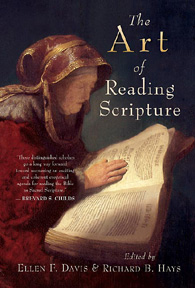



"THE ART OF READING SCRIPTURE" [Davis and Hays] includes several articles I am looking forward to. Some of these ideas are the Scripture's authority in the church, reading Scripture as a coherent story, reading difficult texts, and reading in light of the resurrection. Why can't everybody else see that hermeneutics is so fun!
"KNOWING THE HOLY SPIRIT THROUGH THE OLD TESTAMENT" [Christopher J. H. Wright] is going to be good as well. I really I appreciate his Christocentric approach to the Scriptures.
"ANOINTED WITH THE SPIRIT AND WITH POWER: THE HOLY SPIRIT'S EMPOWERING PRESENCE" [Harvey] is by one of my Greek profs from seminary. For a super-Presbyterian to write a book on the Holy Spirit and His anointing, you know it has to be incredible. This is especially so because the academy is not in view, but the church is.
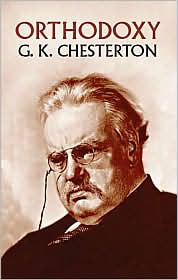
"ORTHODOXY" [Chesterton] is because I lost my old copy and never finished it. It is a poet's unfurling of his attestation to the Apostle's Creed.
"JESUS WANTS TO SAVE CHRISTIANS" [Bell and Golden] is to keep up with cutesy and pop evangelicalism. I've already finished half of this. Bell is just trying to articulate that the Bible should be read with a "new exodus" lens. It smells like evangelical liberation theology [which is a massive paradox] on some pages and smells like the gospel on others.
Friday, October 3, 2008
blessed
My wife had game night with the ladies tonight. So, I went to the Silver Chair, thinking I was going to be able to hit the books and study some. Fat chance. But it's ok. I was radically blessed. I got to sit and chat with some brothers for a while. The following is a non-exhaustive list of what our conversation included:
- how most modern music is dumb
- how music serves as one one of the greatest proofs for the existence of God [read more here]
- rabbinical and traditional Jewish interpretations of the OT and how unique they often are
- Paul's hermeneutic of creation
- how to diminish and augment chords
- how Jesus was known for drinking in Matthew 11 and why people are so afraid of that
- why old hymns are so dang good and pregnant with glorious truths
- men's and women's roles in the church and Deborah as a judge in the OT
- how cool it was to wear nasty hair and paint your finger-nails black and try to be punk rock when you were in college [this probably subconsciously made us think that we are really punk rock b/c we talked about the old days when we tried to be punk rock]
- how Mark Driscoll is often tact-less and right
- how the Gamecocks are the greatest
- about the false dichotomy between love and truth [1 Cor 13 says they're a happily married couple, ya know]
- about the stench that comes from theoretically upright, yet lifeless orthodoxy [and how we crave to be snapshots of love AND truth like Jesus was]
- about how youth ministers and worship leaders are not biblical/NT church offices
- and a bunch more
There are several great things about all that we discussed. First, cigars were present. It made it a bit sweeter. Second, the soft crispness of October's first Friday was light years past satisfying. Third, and most import, there was a near-tangible feeling of the Holy Spirit's presence when I got up to leave. He is there and He is not silent.
Listening to Him, learning from Him, and walking with Him are not easy, but indescribably fulfilling when they are experienced. He is faithful and good.
Friday, February 1, 2008
CONTEXTUALiZATiON and the HOLY SPiRiT
This is a chat between myself and one of my favorite Presbyterian brothers....
ME: The theoretical dynamic of contextualization is good to beat into our skulls, but actually doing contextualization has got to be Spirit-led. As Gordon Fee pleads that that our exegesis and scholarship must be Spirit-wrought, so must our contextualization be. When Paul was burning to go to Spain, he knew that they spoke Latin and that culture there was probably a bit different, but it is not likely he had John Mark run up there and sketch a dozen ethnographic and/or demographic surveys. He was compelled by the Spirit. I dont think they're mutually exclusive though. Knowing the how, why, when, and where of contextualizing - these are gifts of God as well. I hope all this doesn't sound smart aleck. It's kind of where He has been teaching me.
PD: We need to be careful in talking about the Spirt working through us that we are not gnostics. Calvinists believe that God works through means, so we are not left in some kind of Kantian bikini. Thinking hard about contextualization is the work of the Spirt leading us....
ME: I concur readily that contextualization is, or rather - can be and should be - the work of the Spirit. For Paul, gnosticism and being led by the Spirit weren't things to confuse. The gnostics damned the real Jesus, not the real Spirit. Still, I think many of those "means" are the gifts or ministries of the Spirit in the lives of the believers. After Paul yaps thoroughly about theology in his epistles, he then turns to what it looks like for Spirit-endowed believers to live that theology [the "gifts" or "ministries" in Rom 12, 1 Cor 12-14, Gal 5, Eph 4-5, etc]. Believers should have a direct relationship with the Spirit and should also be sensitive to the "means" he uses. I think that it is both/and, not either/or. Is this too pentecostal? I'd rather not categorize it. I just think that is where the NT balance is. Well, I need a good Presbyterian response to this. Feedback please. I need iron-sharpening on this. Also, your image of the Kantian bikini is really seductive. I'm going to buy one for Sara.
Wednesday, December 26, 2007
isaiah 9 [my vote for president]
 The Apostle John understood that he was wonderful counselor [Jn 14.16, 1 Jn 2.1], mighty God [Jn 1.1-3], everlasting father [Jn 10.30], and prince of peace [Jn 16.33].
These Messianic promises from Isaiah 9 are hugely trinitarian. The Holy Spirit is likewise our counselor and God is our Father. Isaiah said this because he knew that all of God was going to redeem all of his people by giving them all the fullness of himself.
And this child, this kid – the government is going to be on his shoulders. It is a government of peace. It is a government that cannot and will not end. It's not that his government will just not stop, but it will always increase. I'm voting for him. "His truth abideth still. His kingdom is forever."
Monday, December 17, 2007
"the spirit of holiness" [romans 1.4]
This is a phrase unique to only this text in all of the NT. Michael Haykin gives good musings on it.
Thursday, December 6, 2007
listening to the HOLY SPiRiT
Gordon Fee is a NT scholar, commentator, and textual critic. He has written a book called “Listening to the Spirit in the Text.” Even the title is convicting to me. I mean, is it God-breathed or not [theopneustos in Gk]? I only read one chapter, but his whole approach in what I read was “to examine the interface between exegesis and spirituality” [pg 4]. Fee expresses his disappointment that the two are often thought of as unrelated. “True Spirituality must precede exegesis as well as flow from it” [pg 6], Fee explains.

I begin with a singular and passionate conviction: the proper aim of all true theology is doxology. Theology that does not begin with and end in worship is not biblical at all, but is rather the product of western philosophy. In the same way, I want to insist that the ultimate aim of all true exegesis is spirituality [pg 5].
The danger is to become a professional [in the pejorative sense of the word]: to analyze texts and talk about God, but slowly to let the fire of passion for God run low, so that one does not spend much time talking with God [pg 7].
If the biblical text does not grip or possess one’s own soul, it will likely do very little for those who hear [pg 7].
Indeed, I don’t care much what you call it – this touch of God on your life – but have it. Because without the presence and power of the Holy Spirit, all else is mere exercise – mere beating the air [pg 7].

Thursday, November 29, 2007
speak to us, HOLY SPiRiT
The more I read the Bible and see how its main characters interact with God, the more I have seen how most of them had an open speaking relationship with Him. This is true for Adam, Abraham, Moses, Joshua, David, Nehemiah, the prophets, Peter, Philip, Ananias, Paul, and others. Does this happen today? Yes.
Dumb dispensational arguments cannot stand against this because this truth transcends all of their abiblical categories. The cessationist argument cannot stand either. If the crazy gifts were only for the apostles, and Philip and Ananias were not apostles, then their position likewise crumbles [with the help of a dozen other reasons; sorry Pd].
So, how do we hear from the Spirit today? How do we listen to the voice of God? I'm not speaking metaphorically. This doesn't necessarily mean that God will at all times speak audibly or call your cell. But how is it that we hear from God just as believers in the NT did? Acts can't be a normative template because it is a historical narrative. At the same time, it can't be a book of exceptions either. How do we do this without turning into faith-healing, doctrinally shallow, third wave, give-me-your-money-so-you-can-get-blessed Pentecostals? Here are a couple things to keep in mind.
Dumb dispensational arguments cannot stand against this because this truth transcends all of their abiblical categories. The cessationist argument cannot stand either. If the crazy gifts were only for the apostles, and Philip and Ananias were not apostles, then their position likewise crumbles [with the help of a dozen other reasons; sorry Pd].
So, how do we hear from the Spirit today? How do we listen to the voice of God? I'm not speaking metaphorically. This doesn't necessarily mean that God will at all times speak audibly or call your cell. But how is it that we hear from God just as believers in the NT did? Acts can't be a normative template because it is a historical narrative. At the same time, it can't be a book of exceptions either. How do we do this without turning into faith-healing, doctrinally shallow, third wave, give-me-your-money-so-you-can-get-blessed Pentecostals? Here are a couple things to keep in mind.
- 98% of guys today who say they have heard God also tell you to put your hands on the screen if you've had a lousy day. We see so many who claim to be led by the Spirit, but it is evident by their fruit that that is not the case. That scares us.
- We simply don't believe it can happen and our thoughts of the power of the Holy Spirit's presence are far too small.
- We never pray to that end. Paul also said to "earnestly desire" to prophesy, but we never do. This could be closely related to numero 2.
- Many think that hearing God speak is dangerous because it could be added doctrine or extra special revelation. When guys on TBN, etc stand up and say they have "a word" from God, generally they mean they are getting ready to preach something they call a sermon.
- If one looks closely, this is not how the Spirit speaks. He speaks unto kingdom ministry [i.e. like Philip going to talk to the eunich in Acts 8]. God does not speak today on the lines of new revelation and/or new doctrine. How absurd. He speaks to prompt in ministry and service, not to reveal something that no one else never knew.
- We have to surround ourselves with others who also want it. I meet with some pastors and guys every Tuesday and we crave to hear the Lord's voice. We crave to feel the Spirit's presence.
- We have to realize that this happens in juxtaposition to the revealed word of God. The Spirit and the word are life. Read John. Read Luther. They concur.
- Lastly, read books and listen to sermons of guys who believe that we can hear from the Holy Spirit and who do.
- Download week 15's sermon from here.
Friday, August 3, 2007
who's afraid of the holy GHOST?
For those of you from Charleston, SC or decently familiar with Charleston, this should be humorous. For those you who aren't, because it is such an old city, they give a bunch of "ghost" tours about freaky stuff and odd happenings. Often mentioned in their talks are the dozens of really old churches there. This is a sign at one of them...


Monday, July 9, 2007
Romans 1-8
The power of God [dunamis gar theou] in 1.16 is evidenced in the righteousness of God [dikaiosune gar theou] in 1.17. This righteousness is one that is credited to the account of everyone who is believing in the perfect life and wrath-absorbing death of Jesus on the cross [3.21-26]. This righteousness shows the power of God because Jews and Gentiles are all sinful and accountable before a holy God [1.18-3.20]. Their impotence to righteousness means that they are powerless on their own. They need another, alien righteousness to be declared "not guilty" in the courtroom of the Just and the Justifier [3.26].
This reality of justification by faith is unfurled in the believer's life by living according to the Spirit. Paul shows the universality of sin [chs 1-3], the right-standing before God that is available [ch 4], the hope that a right-standing entails [ch 5], the problem of sin [ch 6], and the problem of the law [ch 7]. He does not discuss how to live in these truths until ch 8. In chs 1-7, he uses the word "spirit" [pneuma] 5 times. In ch 8, he uses the same word 22 times! "Walk by the Spirit, and you will not carry out the desires of the flesh" [Gal 5.16].
This reality of justification by faith is unfurled in the believer's life by living according to the Spirit. Paul shows the universality of sin [chs 1-3], the right-standing before God that is available [ch 4], the hope that a right-standing entails [ch 5], the problem of sin [ch 6], and the problem of the law [ch 7]. He does not discuss how to live in these truths until ch 8. In chs 1-7, he uses the word "spirit" [pneuma] 5 times. In ch 8, he uses the same word 22 times! "Walk by the Spirit, and you will not carry out the desires of the flesh" [Gal 5.16].
Subscribe to:
Posts (Atom)